Thursday, 19 April 2018

Truly Helping Those in Need: Technology for Disabled Students


            The video, “Assistive Technology: Enabling Dreams,” truly opened my eyes to the great effectiveness of technology in special education. I had no idea that students with disabilities can have tools tailored to their needs and that they can learn so much more through these methods compared to a typical classroom curriculum. I was most stunned by the device that allowed one student to communicate by the movement of his eyebrows because that was the only part of his body that he could really control. Personally speaking, I have not had much experience with those around me having a disability, so I may be severely uninformed on this topic. But I am amazed and grateful that such technology exists to help these students.
            Erdem (2017) states that “assistive technologies are used for supporting persons with special educational needs in numerous areas, such as reading, writing, communication, daily life, etc. . . the use of assistive technologies in education has positive effects” (p. 137). Different students in special education each struggle with different subjects, and often times multiple, or even all, academic subjects. Assistive technology, however, can be tailored and adapted to specific students and their unique conditions to help them find the method that most benefits their learning. For example, in my future classroom and lesson plans, I at least would want tools that allow students to express their thoughts while being comfortable and truly retaining what they learn, not pushing themselves to communicate, and this is entirely possible now.
            However, even if teachers know about these benefits, some are still reluctant to implement or obtain them for their students. According to Williams (2005), “most [teachers] expressed concern about the low quality of their equipment (e.g. computers, networks), the fact that they do not receive very satisfactory technical support, or the simple fact that they do not have the necessary hardware or software” (p. 551). Availability, training, and money play a huge part in being able to use assistive technology effectively, or at all. In order to implement assistive tools in our schools and classrooms, districts must provide adequate technology, and teachers must learn how to use them.
            Nevertheless, I honestly do not see a true downside to a student’s learning when using assistive technology. Those who are unaware of the benefits may argue with some theory that they will become too reliant on their tools, but without such things, disabled students would not even have a chance to learn properly. It is like how “normal” students would claim that paper and pencil is essential in school lessons; the materials such as those shown in the video are just as essential to students with disabilities.
Only things such as money and availability will restrict the ability that a certain school or teacher has to help such students, but I believe a smart investment by school districts would greatly pay off in the long run. No teacher will ever not have a student with a disability in their classroom at some point in their career, and every year, there are special education students attending a school, sometimes without the proper help they need. Obtaining assistive technology as shown in the video would help these students to (previously thought to be incapable of) succeeded in life, and it would complete what should be all teachers’ goal: to help all students, not just those that are “easier” to teach than others.

References
Erdem, R. (2017). Students with special educational needs and assistive technologies: A literature review. The Turkish Online Journal of Educational Technology, 16(1), 128-146.
Williams, P. (2005). Using information and communication technology with special educational needs students: The views of frontline professionals. Aslib Proceedings: New Information Perspectives, 57(6), 539-553.

Wednesday, 18 April 2018

Safety with Technology and the Internet


            In our digital safety project, my group focused on the topic of pharming,phishing, and vishing. All are attacks used by hackers to extract personal information about their victims, such as bank account numbers, Social Security numbers, and more. Before working on this assignment, I had only known the names of these crimes, not how to define them. I encountered some of these before, such as suspicious e-mails promising me thousands of dollars in exchange for access to my bank account and odd telephone calls from who claimed to be an agent of the FBI or some similar organization. However, I was not aware of what exactly those scams were and how big a threat they actually pose.
            According to Brody, Mulig, and Kimball (2007), “In January 2006, there were 17,877 cases reported. This is the largest number ever recorded and that figure is 50 percent higher than the previous year” (p. 50). And that number has only been growing since then. With the sheer number of cases out there, it is important for not only teachers but also their students to be aware of these crimes and how to protect yourself from them. Students are especially susceptible to pharming, phishing, and vishing because they are still young and may not be tech-savvy enough to protect themselves from attacks. Also they spend a significant amount of time using the Internet and social media. As Moreno, Egan, Bare, Young, and Cox (2013) stated, “Internet safety is highly salient for today’s youth as they spend up to 10 hours a day using various forms of media . . . The vast majority of adolescents have internet access and most report daily use” (p. 1). Thus, teachers should take the responsibility of teaching their students how to be digitally safe. For myself, I would teach them by showing real-life examples and consequences of different threats, so they are aware of that it can most certainly happen to them at any time.
            The other introduced topics of this digital safety project, cyberbullying, fair use & copyright laws, sexting, textual harassment, and privacy, are also highly important for everyone to know, especially teachers. These are all part of the daily life of teachers and students in the educational system, and being ignorant of these can easily cause you serious consequences. There is not anything I can think of that I would add to this list for digital safety, as these are already significant enough to me.
            In my opinion, this digital safety project was an eye-opener for me and greatly benefitted to my knowledge of technology. I now know more about educational subjects I had not given nearly enough thought into, and I feel better prepared for using technology and the Internet safely. Unfortunately, my group did not use any web conferencing tool to work on this assignment, as we did not find the need to use them. However, I do see the advantages to uses the tools introduced in class, and I think they will certainly prove useful in the future. There is not anything I would suggest to change for this assignment because it has already proved helpful to me and hopefully to my fellow classmates.

References
Brody, G., Mulig, E., & Kimball, V. (2007). Phishing, pharming and identity theft. Academy of Accounting & Financial Studies Journal, 11(3), 43-56.
Moreno, M., Egan, K., Bare, K., Young, H., & Cox, E. (2013). Internet safety education for youth: Stakeholder perspectives. BMC Public Health, 13(543), 1-6.

Thursday, 12 April 2018

Treefrog Treasure (Online Game Rubric) - ED271 Group C

ED271 Group C
Tehyani Crisostomo
Ikea Natividad
Rayanna Pabroa

"Treefrog Treasure" Online Game Rubric


Friday, 16 March 2018

Games & Education


            The Educational Online Game assignment had me and my fellow group members focus on one online educational game, analyze it, and present it to the class. It was an interesting assignment that allowed me to look further into the benefits of using games to teach. I have not created many rubrics so far, and trying to make one for an online game was certainly a different experience. I struggled a bit with defining the categories of the rubric, what constituted a good score in areas such as visuals, feedback, and educational value, because I have never thought about using games seriously in my future classroom. However, with the references given to the class, my group and I were able to determine our standards and requirements to put into our rubric, and I think I now have a better understanding of what to look for in a game that I would to use in the future.
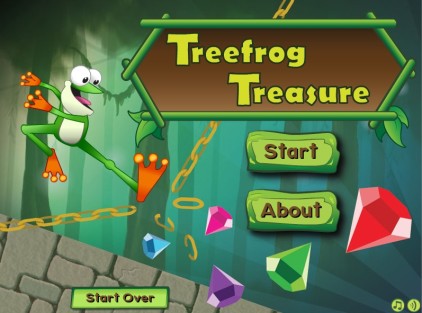
            The game that my group decided on was “Treefrog Treasure,” a free platformer game that helped in reinforcing and reviewing certain mathematics processes, such as fractions, decimals, and other number line concepts. It was fairly simple in its directions and gameplay, so that helped in our decision to focus on this game. Although it may not be an original subject for an educational game, I believe its simplicity can still greatly benefit students. According to Jameson (2014), many young children can develop math anxiety, where one starts to avoid exposing themselves to mathematics, and there are “several correlates of math anxiety, such as high test anxiety, low enjoyment of math, low self-confidence in math, lack of motivation toward math..." (p. 519). Thus, I believe that a game such as “Treefrog Treasure” can help in dispelling math anxiety, as it provides an easy and enjoyable method of practicing math that can boost self-confidence.
            Although I plan to teach high school-level ESL classes, I can still see the advantages of this game. I may not be able to use it in my future classes specifically, but as said earlier, it can help younger children from developing math anxiety. Also, it can also help students with disabilities who struggle with mathematics. Crawford, Higgins, Huscroft-D’Angelo, and Hall (2016) conducted research on the benefits that electronic tools for students with disabilities, and they stated that “in mathematics, ESTs [electronic support tools] can reduce differences in achievement gains, and differences in achievement gains help define the achievement gap" (p. 1178). Being an online educational game, “Treefrog Treasure” can be considered as an EST, so it can definitely be helpful to disabled students, as well.
            To present our game, my group chose to use Canva. None of us had used it before, but we wanted to try something different and new, especially compared to the tools used by other groups in our class. It was a bit challenging at first to become used to Canva, but we eventually adapted to it and made our presentation. We also used Google Docs for most of our note-taking, though we tried using Google Keep sometimes. But the former proved to be more efficient for us. We also used Kahoot to create our interactive quiz at the end of the presentation to enhance our audience participation. In future group projects, I hope to expand and try out different tools and technology to effectively communicate and complete assignments.
           
References
Crawford, L., Higgins, K., Huscroft-D’Angelo, J., & Hall, L. (2016). Students’ use of electronic support tools in mathematics. Educational Technology Research & Development, 64(6), 1163-1182.
Jameson, M. M. (2014). Contextual factors related to math anxiety in second-grade children. Journal of Experimental Education, 82(4), 518-536.

Video Sample of "Treefrog Treasure" Gameplay:

Tuesday, 6 March 2018

Elephants & Monkeys

The pink elephant dreamed about flying monkeys. The elephant, who was pink, dreamed about monkeys that could fly. The pink elephant dreamed about flying monkeys.The pink elephant dreamed about flying monkeys.The pink elephant dreamed about flying monkeys. The pink elephant dreamed about flying monkeys. The elephant, who was pink, dreamed about monkeys that could fly. The pink elephant dreamed about flying monkeys. The pink elephant dreamed about flying monkeys. The elephant, who was pink, dreamed about monkeys that could fly. The pink elephant dreamed about flying monkeys. The pink elephant dreamed about flying monkeys.

Tuesday, 23 January 2018

Site Overview

This is an open place to learn about all languages and cultures. This is an open place to learn about all languages and cultures. This is an open place to learn about all languages and cultures. This is an open place to learn about all languages and cultures. This is an open place to learn about all languages and cultures. This is an open place to learn about all languages and cultures.